The 5-Minute Wind-Down Routine That Actually Works
You don’t need an hour. You don’t need candles, a special app, or a perfectly quiet room. You just need five minutes and a little intention.
Most of us end the day by scrolling until we fall asleep, which means our last mental input before bed is a flood of noise — news, other people’s highlights, random content. We wonder why we wake up tired. We wonder why our minds race at night.
Here’s a better way to close out the day. It takes five minutes. And it actually works.
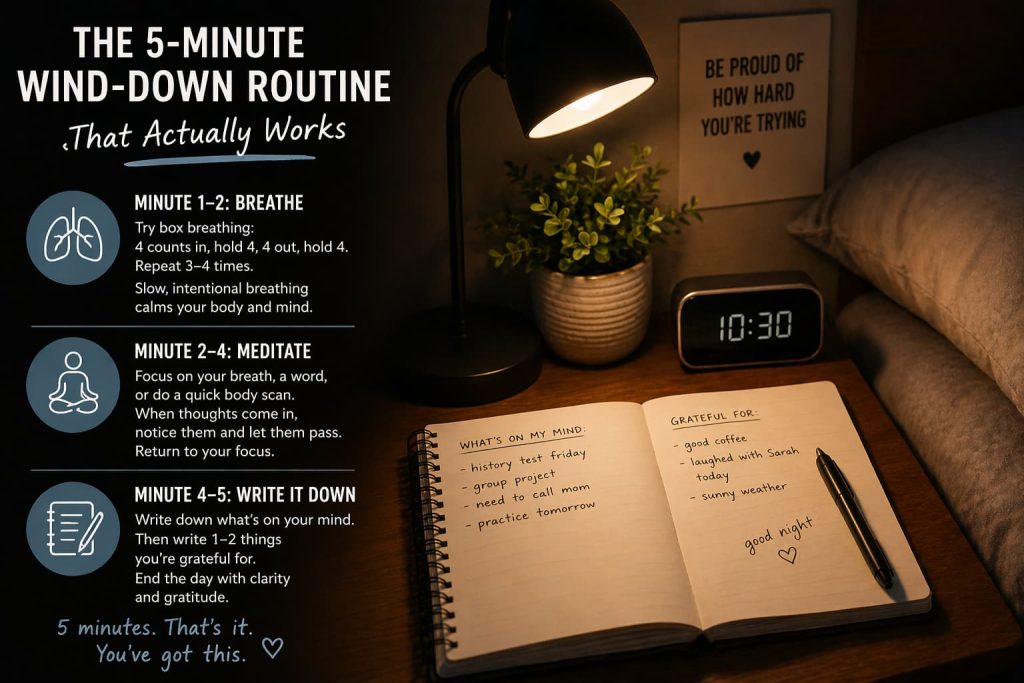
Minute 1–2: Breathe
Before anything else, just breathe. Not the way you’ve been breathing all day — shallow, rushed, on autopilot. Really breathe.
Try box breathing: inhale for 4 counts, hold for 4, exhale for 4, hold for 4. Repeat that three or four times. It sounds almost too simple, but there’s real science behind it. Slow, controlled breathing activates your vagus nerve, which signals your nervous system to shift out of fight-or-flight mode. Cortisol drops. Your heart rate slows. Your body starts to actually believe the day is over.
If box breathing feels too structured, try the 4-7-8 method instead: inhale for 4, hold for 7, exhale slowly for 8. The long exhale is the key — it’s what triggers the calming response.
Two minutes of intentional breathing is enough to change your physiological state. That’s not a small thing.
Minute 2–4: A Short Meditation
You don’t have to sit cross-legged or empty your mind. That’s not what meditation actually is.
For these two minutes, just sit or lie still and focus on one thing: your breath, a single word like calm or rest, or a simple body scan — starting at the top of your head and slowly releasing tension down through your shoulders, your chest, your hands.
When a thought comes in (and it will), don’t fight it. Just notice it, let it pass, and return to your focus point. That’s the whole practice. You’re not trying to achieve silence — you’re practicing the skill of gently redirecting your attention. Over time, that skill becomes incredibly useful in everyday life.
Even two minutes of this before bed can reduce the mental chatter that keeps so many of us staring at the ceiling.
Minute 4–5: Write It Down
The last minute is for your journal. Just one minute — that’s genuinely all it takes.
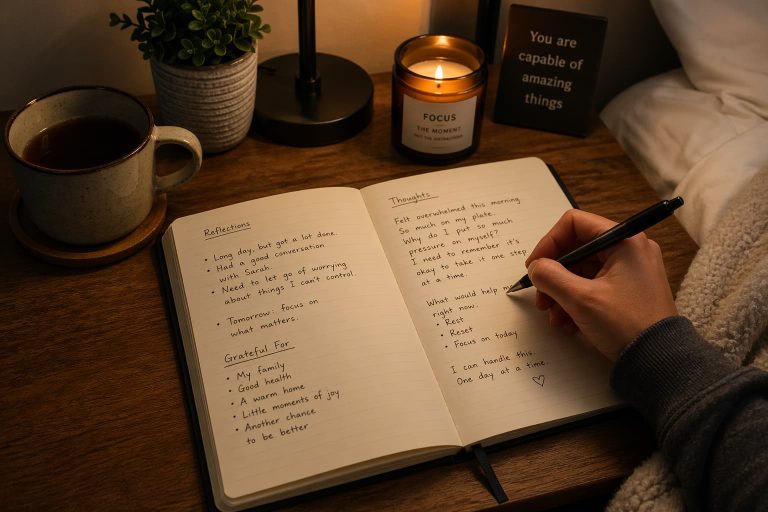
You’re not writing an essay. You’re offloading. Write down whatever is sitting heavy on your mind so it doesn’t have to stay there overnight. Then write down one or two things you’re grateful for from the day.
That second part matters more than it might seem. Ending the day with gratitude — even just noting that your coffee was good, or that someone made you laugh — shifts the final frame of your day from stress to appreciation. It doesn’t erase hard things. It just makes sure they aren’t the last thing you hold onto before you sleep.
Why It Works
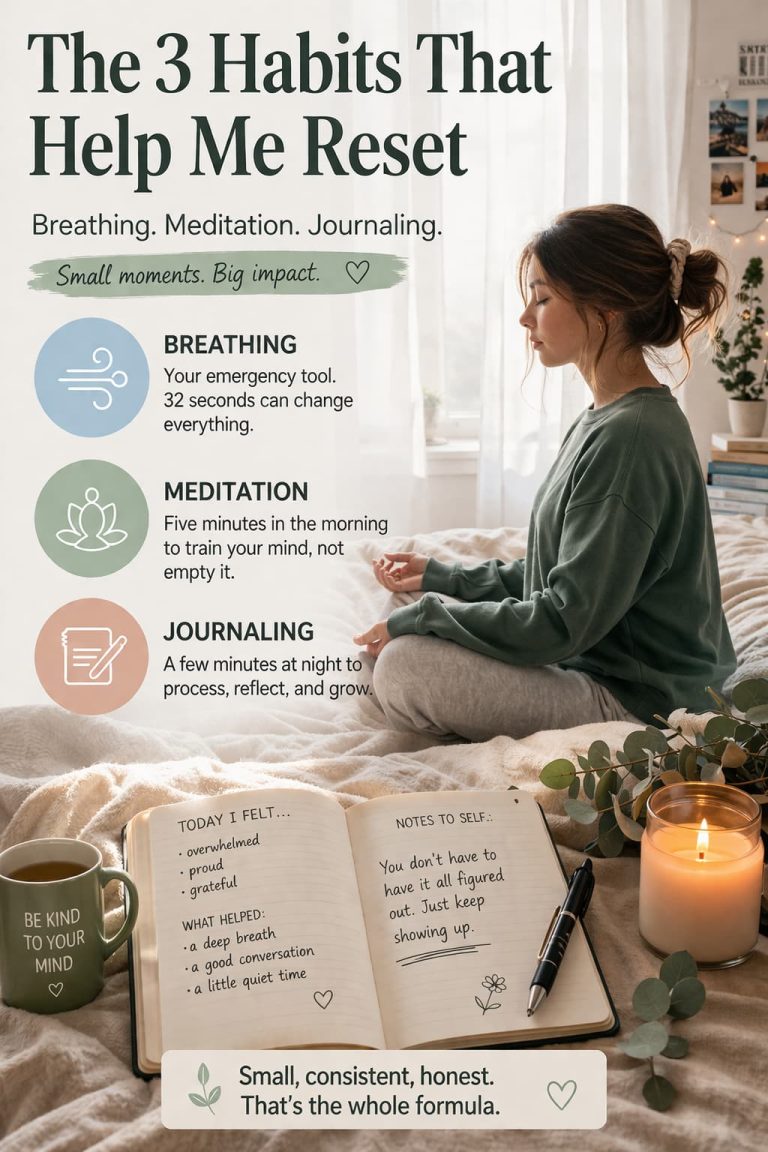
Each of these three pieces does something different. The breathing resets your body. Meditation quiets your mind. The journaling processes your emotions and ends on a positive note. Together, they create a clean transition — a real signal to yourself that the day is done and it’s safe to rest.
Five minutes. That’s the whole routine.
You don’t have to be a wellness person to do this. You just have to be someone who wants to sleep better, stress less, and end the day feeling a little more at peace.